

At 7:35am on 19 August 2026, a white trail cut down through the sky over the Gobi at Minqin in Gansu. LandSpace's Zhuque-3 Y2 launched successfully, and its first stage came down to a precise soft landing — the first land recovery of an orbital-class rocket in China.
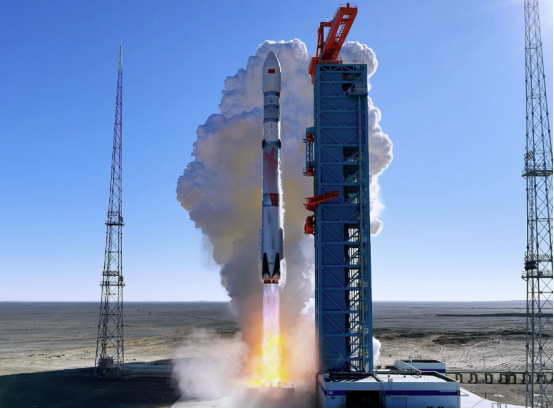
Image: web
From ignition to touchdown takes only tens of minutes, but the work that decides the outcome was finished months earlier. A torque deviation on one bolt, an oversize weld, a valve clearance out by microns — any of these can cost the recovery. Precision measurement is the invisible hand controlling those details, and AEH, nearly thirty years in this field, is one of the companies most deeply embedded in that work.
As spaceflight moves from expendable to reusable, measurement equipment is being promoted from arbiter of quality to guardian of the process.
Reuse: the question commercial spaceflight has to answer
The first stage accounts for roughly 70% of a launch vehicle's cost, and building a new one takes months. Under an expendable model, launch costs have long constrained large constellations and commercial use of space. Reusability exists to spread that cost across many flights and raise launch cadence.
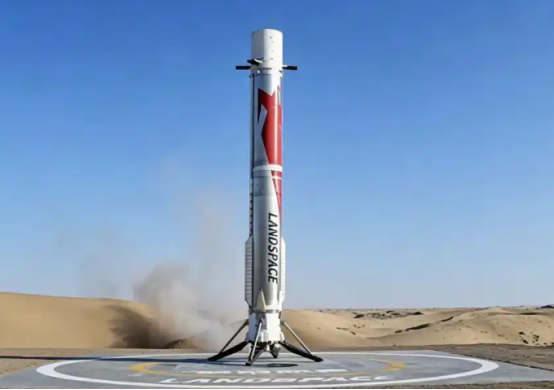
Image: web
Zhuque-3's approach — liquid oxygen and methane propellant, a stainless steel airframe, vertical recovery — was fully validated on this mission. Its nine Tianque-12A engines are designed for at least twenty reuses, and fired successfully at all three stages: launch, re-entry braking and landing deceleration, demonstrating both the reliability of the clustered configuration and its throttling capability.
Every recovery tests one proposition: that the route to lower launch costs is viable. Behind each test, precision measurement is the silent gatekeeper. From engine turbine discs to landing shock absorbers, from airframe sections to valve assemblies, no critical component ships without quantified verification.
What made the landing possible
One of the technologies behind a successful recovery is precision measurement running through design, manufacture and test. A reusable rocket demands far more of its components than an expendable one. A single vehicle must launch, re-enter and land under extreme conditions, so every critical part — turbine pumps, valves, airframe structures, landing mechanisms — has to pass high-accuracy inspection from raw material through to finished component.
Zhuque-3 uses a stainless steel airframe extensively, and that material and its processes raise the bar for both manufacturing accuracy and inspection. Landing legs, grid fins and engine throttling mechanisms are moving parts specific to reusability, and their dimensional accuracy, form and position tolerances and assembly quality determine directly whether recovery works.
Those requirements match the aerospace experience AEH has built up. Since the first machine went into Xi'an Aero-Engine in 2003, its measurement technology has been applied throughout inspection of aero engines and critical spacecraft components.
From a first machine to standard equipment
Aerospace manufacturing sets a very high bar, and a reusable rocket's demand for reliability turns measurement from a supporting step into a decisive one. Founded in 1997, AEH works solely in precision measurement and was named among China's specialised and innovative enterprises in 2023. Its products centre on coordinate measuring machines, with in-house AC-DMIS and NET-DMIS software and full bridge and gantry ranges; its core software holds PTB certification. In 2003 AEH won a competitive tender against the international leaders, taking the order from Xi'an Aero-Engine and achieving the first breakthrough for a Chinese CMM in aviation. "That was not only a breakthrough," chairman Song Jianzhong recalls. "It proved that in the most demanding application, our instrument was every bit as dependable." In the three decades since, from Shenyang to Chengdu, AEH equipment has become part of how spacecraft are built.
Zhuque-3's recovery is a footnote to that long accumulation. Moving from building rockets to building them repeatedly depends on precision measurement. With more than 120 intellectual property rights and close involvement in drafting standards, AEH has reshaped geometric inspection of critical components from discrete, after-the-fact arbitration into online, real-time, predictive quality control. In April 2026 the company showed its embodied intelligence CMM at the 14th China CNC Machine Tool Fair. From hardware to software, from inspection to data management, AEH is securing this one link in advanced manufacturing.
More than a landing
Zhuque-3's return is a decisive step from being able to launch to being able to reuse. Behind every step like it, precision measurement does the lifting — supplying micron-level confidence for every weld, every thread and every ignition, in places the public never sees. What AEH has done for nearly thirty years is make that reliable enough to count on. From aero engines to launch vehicles, from a first machine to standard equipment, the point is straightforward: in the most demanding applications, this instrument is worth trusting. As commercial spaceflight moves into an era of reuse, AEH stands behind every launch and every landing.